Well… the bang for our bucks is decreasing and quicker than you think. Inflation? Not quite – let us have a look together, shall we:
Consider the following data from 1970 to 2023:
- House prices have increased 29-fold.
- Rent has risen 20-fold.
- Education costs have surged 20-fold (in countries with self-funded education).
- Gas and fuel prices have gone up 10-fold.
- Public transportation costs have increased 10-fold.
And in the same time frame:
- Salaries have only increased six-fold.
- In 1970, the average household had 3.5 children, whereas in 2023, it’s 1.9 children per household.
- Dual-income households accounted for 47% in 1970, and today it stands at 67%
(All numbers are found on www.tradeconomics.com)

What this implies is that you got more value for your cash back in 1970, and today you must put in more hours than you did back in the day, to achieve the same living standard.
Of course, life has got a whole lot better due to innovations, and furthermore the world is generally a safer place today, than it was in the 1970’s.
But this is where I must disappoint you. Even though the world is a better place today, there are still some areas where there is an increasing mismatch, when we look at the numbers.
Tax & VAT rates have gone up, bureaucracy in the public sectors is at all-time highs, most educational systems in the western world are falling off a cliff according to the OECD charts for public schooling. Public transportations are inefficient and expensive, public hospital waiting lists are record long. I could go on and on, and in my experience numbers do not lie.
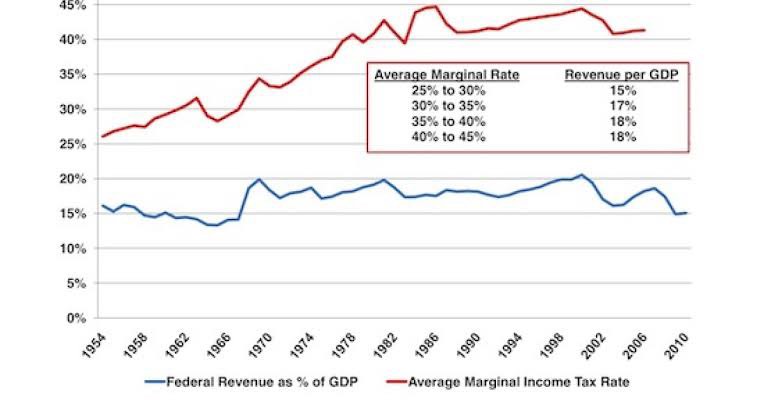
(www.statista.com, marginal income tax rate is rising)
Shockingly you get less value for your money on the housing market, and on top of that, so is what you can expect from your tax money.
Is it capitalisms fault? Not at all, since that is the only thing actually working within the system. Capitalism is providing the innovations and services that give us some bang for our bucks – due to market economy.
Do companies need to pay their employees more? Absolutely not. Companies pay salaries based on the value the employee provide.
Is it then the politicians faul thent? Maybe, but not really. They are just building and adding onto a broken system and trying to provide for their own interests.
Then why are things going this way?
Well in my opinion, it’s the elders (the generations of the past times) that carelessly promised welfare benefits long into the future. One after another.
Carelessly throwing the bill into a distant future, mindlessly expecting the people of the future would live exactly like they did. Treating our welfare system as it is some sort of mortgage loan.
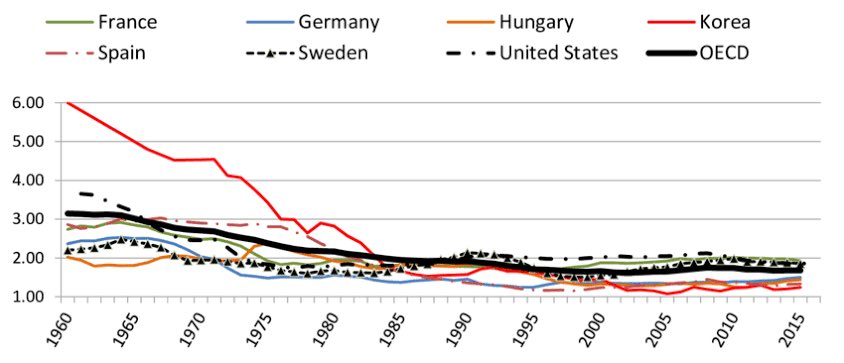
(From www.oecd.org, fertility rate is plummeting – our general economic output and personal preferences are bound to change drastically)
And yet, today the elders have the audacity to complain about the youth and how the world is going today, while completely ignoring what and who potentially engineered all this.
Today house prices are increasing, because more people demand housing near larger cities, where you can expect more options and opportunities. There can only be so many of roofs and walls in the metropolis, which mean demand is bound to exceed the supply of homes and shelter for people’s families.
So fair enough. Prices go up and we know, that is what happens when demand exceed supply, and that is always a good thing. House and shelter prices goes up and sometimes down.
Then why is the salary not going up in the same rate as shelter and living prices? That could be because dual income is more common today, and general cost-of-living has gone down.

But here is my opinion: The one-size-fits all politics that the governments made back in the 1970’s, along with the minor adjustments since then, just aren’t progressive enough for the future we are moving into.
Today it seems the government is there for the people, and not that the people are there for the government ,which is a huge mistake and misunderstanding.
The government thinks we need them more, than they need us – the taxpayers. Which is a huge danger on every level. It destroys creative thinking and centralizes people where the power is bound to be. It furthermore gathers people near larger cities, where they see the most opportunities.
There is no rule or law stating, that real estate and salaries must follow each other accordingly – which is great in my oppinion.
But there are rules and laws dictating you to pay taxes, and some you might not agree on. For example: I don’t agree on paying taxes, so some less fortunate people can get welfare checks, so that they can live in an expensive capital, creating an artificial market. In my opinion the free-market should win here, and the free-market, without welfare checks, would offer these people shelter in other more affordable areas, thus offering a more dynamic market with more healthy movements.
The taxes are going nowhere, because the people back in the day promised so many welfare benefits, that no politician will ever dare to pull them back, in fear of losing their dear votes and support.
They promised everybody so much, and sit here now like spoiled brats, with a bill, that they are not even going to pay, and still have the audacity to complain.

(From OECD report – Social Expenditure (SOCX) Update 2023, welfare spending is increasing through the roof in the west – in a time where we should be getting smarter and more innovative.)
To sum it up a little bit: I think there should be some serious auditing of our welfare system. The one created by the elders was careless and to static. It’s old and doesn’t work anymore ( and probably never did).
We need a system where the free market challenges each other, and the government sits in the back, and let it play out. A new and smarter system where the humans of today is the focus. A welfare system that even challenges itself.
Here’s an example: public schools or hospitals should have the responsibility to control their even own primacy. If one should follow behind, people should freely choose to change school or hospital. If this happens the public organization are responsible for their service, and should go bankrupt and shut down, just like what would happen in the real world.
This would mean, that everyone would strive to do their best for the humans they are servicing, and not the government breathing down their neck.
If a public entity was to close due to lack of management, the government sitting in the background, could step in for a brief period of time and support the public entity, and then leave again. Essentially meaning the government’s job is only to create stability.
It would also reduce taxes, since public organizations would strive to get better and more effective activities.
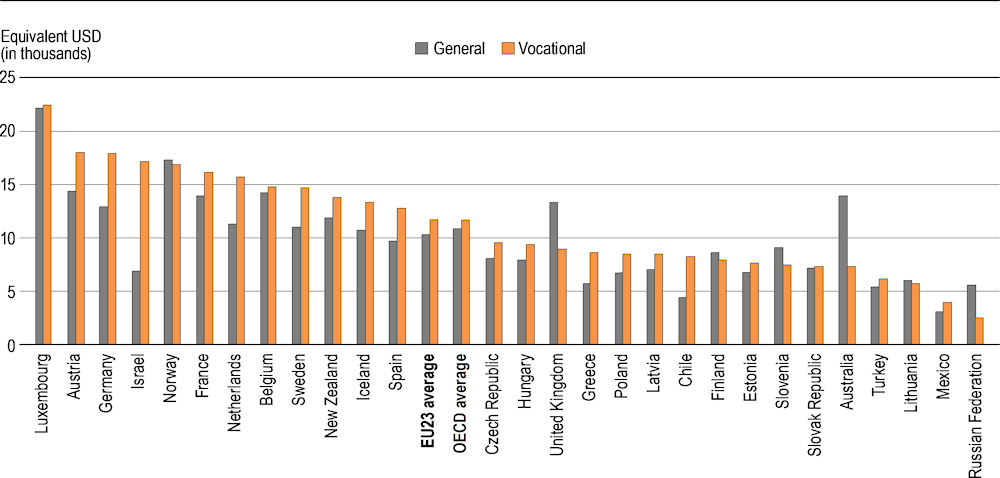
(From oecd.org, what countries pay pr. student in their educational system)
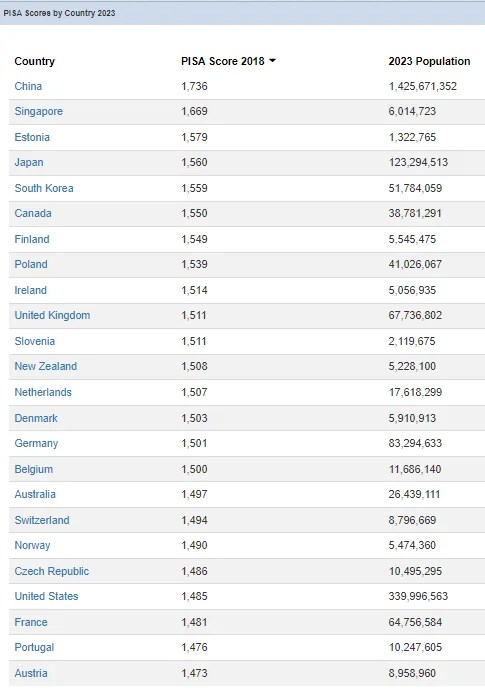
(from OECD PISA 2018 educational results – as you can see between the two graph’s is that there is no correlation between money spend pr. student and the results)
Today’s governments ask for more taxpayer money and gives back with less value. A public organization can give you a poor service, and still be there tomorrow without a doubt. Some might even still ask for more money, and not even care to think of optimizing their operations. Does that seem right?
If a public organization in a society is given more freedom, trust and responsibility, they will be encouraged to do their best to attract citizens. Therefore, citizens will seek out where it’s best for their needs, which would create a healthy real estate market, and not the artificially market the government protecting.
Some governments, especially in the Nordics, say they use taxpayers’ money for welfare checks to less fortunate people, so they can live in popular cities and thus control the inequality gap. This is questionable since it, again, keeps the real estate market at artificial level, which is benefiting no one. In essence the government is saying “FUCK YOU. We know how to spend YOUR money better than you do.”
It’s my belief after considering the numbers, that cutting down on welfare and taxes, would make more people to spread out across the country, since public organizations would become better and more competitive. The inequality would become slimmer, we would get more bang for your hard earned bucks, and on top of that get healthier markets and a striving economies.
I am not saying we shouldn’t protect people who can’t protect themselves. Of course we should. My dream is to see public schools with both fortunate and less fortunate kids playing together, and have less of a divide than we see today.
In conclusion, a modernized welfare system with responsibility, not the elimination of welfare, can provide more value for our money and make us all wealthier.
Thank you for reading my blog. I could delve further into these topics, and I hope you’ll stay tuned for more!
Note: This wasn’t a debate about inflation.
All sources are from:
(There are no direct links besides the snapshots in the blog due to the sources being pragmatic)


 Adspredt