In the landscape of American politics, one might assume that capitalists would rally behind a candidate like Donald Trump, a businessman-turned-president promising to rejuvenate the economy and prioritize American interests. However, a closer examination reveals a more nuanced picture. Let’s delve into why capitalists, despite some shared interests, might not be as enthusiastic about Trump’s leadership.
Trump’s narrative of bringing back production and industry to the USA resonated with many Americans, particularly those in manufacturing-heavy regions. However, the reality is that achieving this goal often requires access to cheap labor. Restricting immigration and closing borders might seem like a solution, but it could backfire for capitalists. With only American workers available, wages would inevitably rise, leading to salary inflation. This, in turn, could compel the Federal Reserve to keep interest rates higher for longer to curb inflationary pressures, which could stifle economic growth.
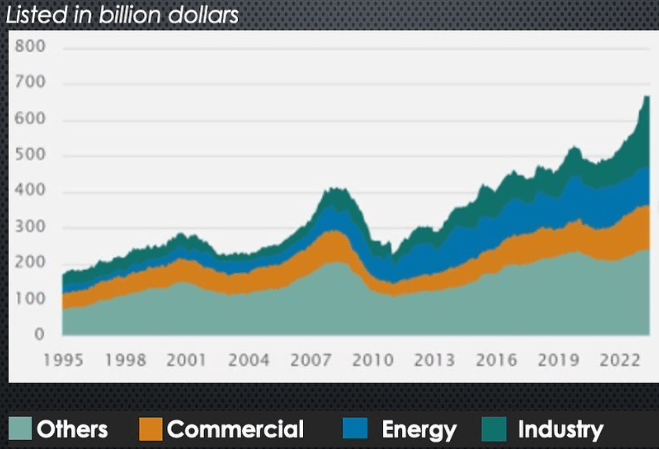
Building production in the USA:
(Source: Census Bureau, more production is coming back to USA)
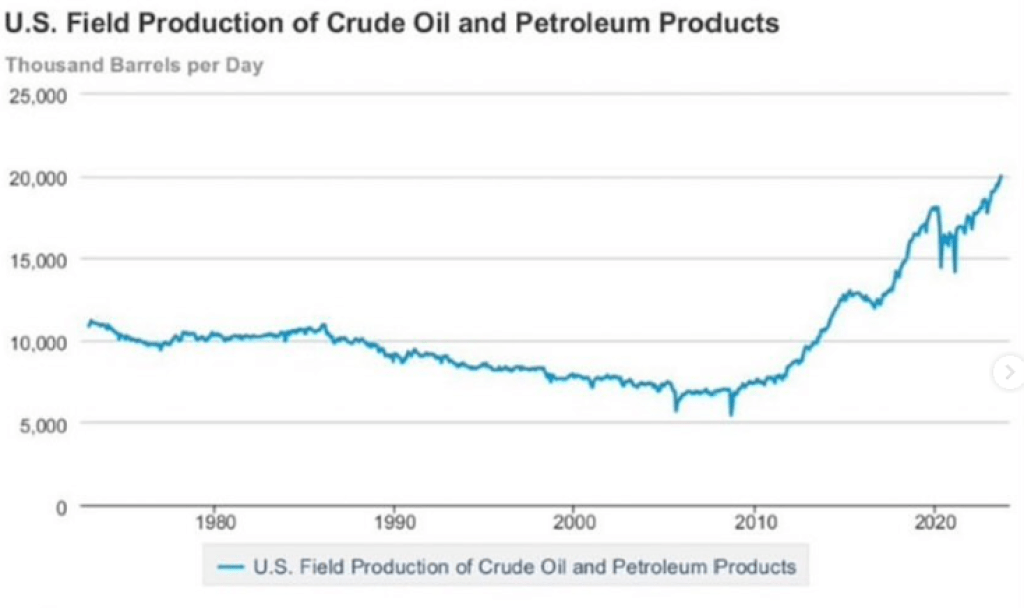
Even the oil industry which is Trumps favorite sector outside real estate should be in dire need of a policy changes would be inaccurate, as the sector in the USA is currently experiencing unprecedented levels of production. Contrary to suggestions that the industry is struggling, it’s worth noting that the United States is currently at the zenith of its oil production capabilities. The demand for oil persists, and America is actively meeting this demand by consistently pumping oil, irrespective of the political landscape, including the tenure of Trump’s presidency.
(Source: U.S. Energy information Administration, Oil production in U.S. is record high)
When Trump assumed office, he inherited a relatively stable economy from his predecessor, Barack Obama. Obama had grappled with the aftermath of the 2008 financial crash, making tough decisions to steer the country towards recovery. In contrast, Trump took office during a period of relative economic strength, which made things easier to give tax breaks. This context is essential to consider when evaluating if Trump would be able to give the same kind of text breaks once again.
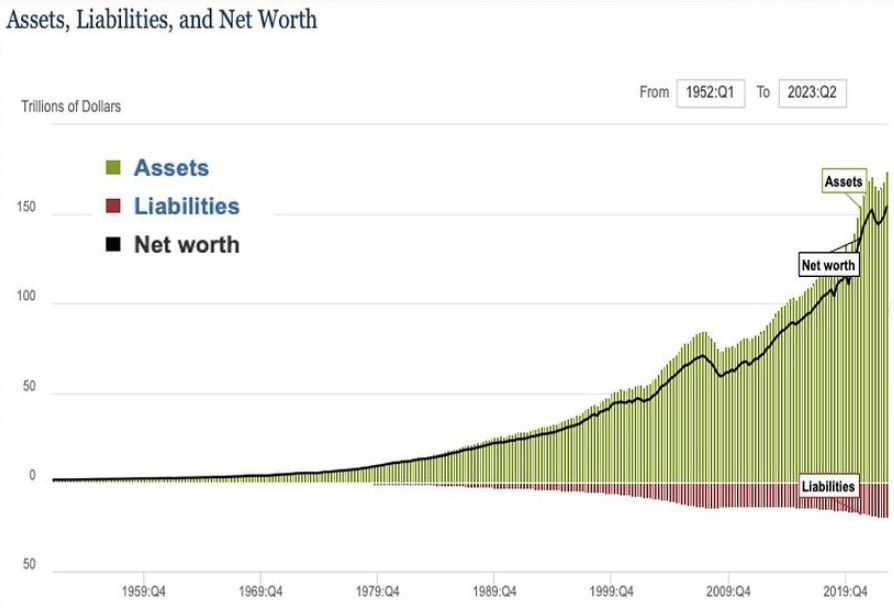
(Source: Board of governors of the federal reserve system, Americans households wealth is not 10 times bigger than debt)
One hallmark of Trump’s presidency was his volatility in decision-making and communication. While his assertive approach appealed to some, it often unnerved markets. Capitalists thrive on certainty and stability, traits that were often lacking in Trump’s governance style. Uncertainty introduced by erratic policy shifts can lead to market volatility, which is generally unfavorable for investors and businesses alike.
As a businessman, Trump’s mindset naturally gravitates towards personal interests. His slogan, “Make America Great Again,” resonated with his base, emphasizing a focus on domestic prosperity. However, the intricacies of global economics dictate that American interests extend beyond its borders. The US economy, as the world’s largest, is intricately linked with global markets and trade. Trump’s emphasis on protectionism and America-first policies risked isolating the country and undermining its position in the global economy.
In conclusion, while there might be areas of alignment between Trump’s rhetoric and capitalist interests, the broader economic realities, political context, market sentiments, and the tension between personal and national interests paint a more nuanced picture. Capitalists, as rational actors, weigh various factors when evaluating political leadership, and for many, the uncertainties and risks associated with Trump’s presidency might outweigh the perceived benefits. Ultimately, the intersection of politics and economics is complex, and simplistic narratives often fail to capture its intricacies.
PS – This is not a Biden campaign act at all! It’s only to add some more nuances and perspective to the matter.
So, in my most recent blogpost I wrote about how the bigger and expanding welfare system, that was created by the older generations, is crushing us today. The blog demanded that instead of following the old way of consuming our welfare, we should focus on the individual in a society to take more responsibility.
I did not hold back my critique towards the seniors, that today live of welfare and have a thousand of opinions, since I believe they are the reason why the welfare system is spinning out of control.
One might think that I was looking for someone to blame, and thus pointed my finger at the seniors. Case closed – it is their fault!
But I would like this post to be about where we are now, but also where we should go from here. The answer is responsibility and that can be harder for a generation, that grew up in a “safe” welfare system, to suddenly adjust to. Or can it?
I am of course talkin’ about the younger generations. These generations are growing up with problems that can easily be blamed on the government and/or the society they live in. By the younger generations here, I mean in the age group between 18 to 35 years, when people are beginning to start their professional career and family life. We can call them young-adults. (So I am speaking about Gen Z and and younger Millennials – I belong to this group as a 31 year old man)
But nothing could be further from the truth. Yes, the society you live in has its traditions and the government has it laws, but it’s up to the individual to live their life with the cards they were dealt. Will that always be fair? No, it won’t always be fair in the presence tens, but years of taking charge and responsibility of your own life – that same life will start to get better, but also more meaning full.
In the western world we tend to say that we have to high taxes, a lacking infrastructure, toxic social norms, economic system running on debt or insufficient public sector, which is all correct. But that is just pointing out the obvious that most people can agree on. Today when young people grow up, they are told something along these lines: “it’s okay they didn’t make it big – the schooling system failed them” or “it’s hard to make it as an entrepreneur because the tax system is difficult”.
Yes, I agree. I even wrote in my latest blog that the educational-system was dropping and the taxes were destroying economic output and creativity. Those are all facts that we know, but the challenge going forward is taking responsibility for those factors.
The younger generations of today, especially in the western parts of the world, should be careful of not going in the entitlement trap and expecting things to be handed to them. Getting a good career or a life in harmony with your soul, is up to that single individual.
So, let’s say someone healthy drops out of school and progresses into a low-wage labor job, and additionally have harsh conditions at work, then it would be up to that individual to go to work every day. Go and deliver on what is expected at this job, whilst also focusing on how to get an even better job alongside improving their skill set. This way the individual will be learning about responsibilities and admire what it took to progress to next career progression.
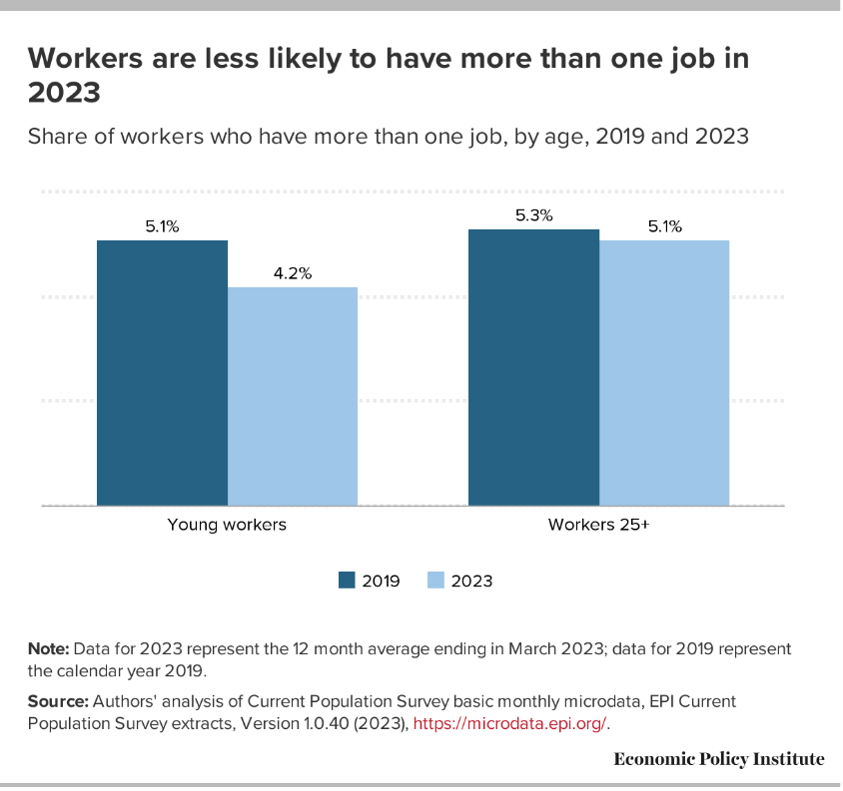
(Source: Economic Policy Institute)
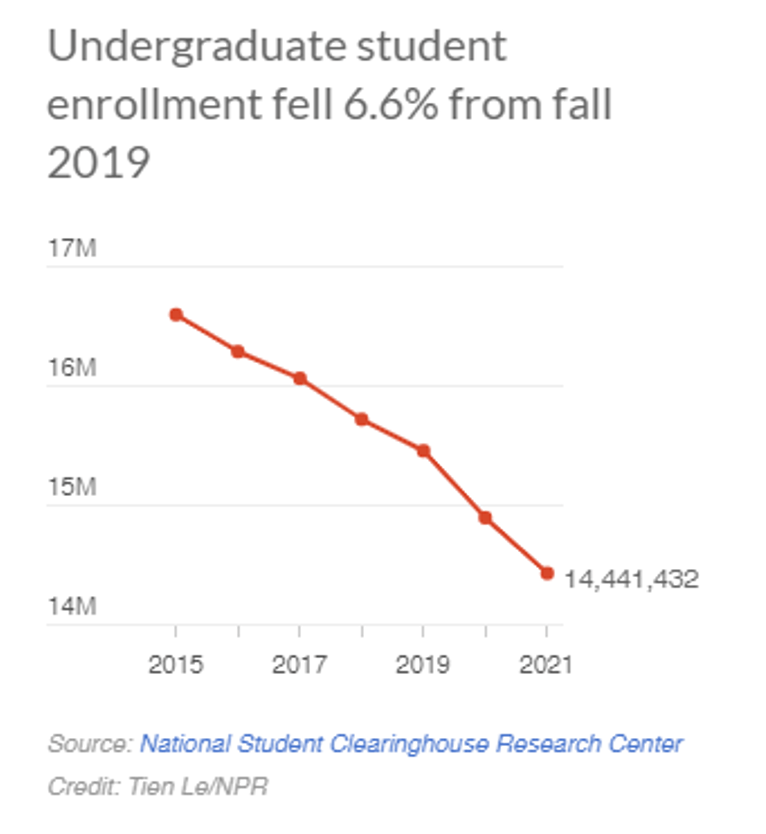
(Younger generations enrollment for educations is also cliff diving – that could also be because it’s too expensive. So few people studying and fewer young people wanting to work compared to their elder generations)
It’s a fact that today less young people in the age between 18-24 years want to take a “student job” or a “part-time job”. One might say it’s because the youth “know” what they are “worth” and thus don’t want to put up with those kinds of jobs. But how do they know it sucks? When they never tried it or had those life lessons, that jobs like this tend to teach you. You could argue that since they never really needed to take a job like this, they never really needed to take responsibility for their own life. (Rettede en del her – hvad tænker du?)
If young people took a student/part-time job, it would be healthy and benefit everyone. It benefits the society they live in, but also the individual that must see eye to eye with the challenges they face at work.
In additions to this, if the individual with a part-time job while studying also takes responsibility for the local community they live in, you guessed it, we will have a prosperous society! A society where we need less governments and weird taxes.
(OECD: on mental illness in different age intervals)
If we are creating a generation of lazy, over critical and entitled citizens, we will never have a work force that will challenge the declining welfare we live with today. Furthermore, the welfare we live in will decline even faster, with negligent seniors combined with entitled younger generations, it is bound to end in complete disaster. No politician will ever dare to touch on that subject, because they are in it for the authority, and to see people requiring a system to rely on, is basically something the feast on for a politician.
It’s also a fact that more young people and teens today are experiencing depression, obesity, peer pressure, online bullying and social isolated addictions. Some might say this is caused by Social-Media or rapidly evolving technology sector, which always have new features, thus creating constant FOMO (Fear of missing out). And yes, that is most likely true, so I won’t jump into the subject of how harmful SoMe can be to the youth. But I will point out that it’s not easy being young and it has never been easy. Not even in 1928, 1944 or 1976. So, the essence of my argument is, that being young has always been a tough time, but it will get much more challenging, if you are in some sort of diagnosed box in the governments welfare system. A box where you landed and that’s now something that society just accepts. It will de-couple the person from their initial responsibilities as a human and a citizen, which is even more harmful than any toxic profile on a SoMe.
Therefore I advertise if younger people and established citizens start to take more charge of their own life and show responsibility, we won’t be as dependent on a welfare system to protect us. If everyone takes responsibility for their own health and private economy, they will also start to demand things from the society they live in, and if the society can’t deliver, they will start to vote on newer and pragmatic politicians, or even worse, they might start to migrate to other places consequently. This is a double hit in the short term, but a long-term blessing in disguise.
It will be negative in the short run due to the political system will be fluctuating towards newer norms from the newly voted politicians. It will also hit the creativity and the economic output, if the innovative thinkers start to move abroad. But in the long run it forces the politicians to make politics based on the fact, that most citizens can help themselves and start to make economic incitements for innovative thinkers to move back.
When people can help themselves, they won’t need welfare as much and therefore the government won’t demand as many taxes and progress towards tax reliefs. All this would also be without harming an existing prosperous society. Don’t get me wrong, we still need to help people who actually need help, and that is sometimes done better by a big institute as a government would be. Moreover, the government should also insure that everyone has a schooling program to follow and trustworthy hospitals, is a point every society must strive to achieve. Having a healthy and intelligent work force will benefit the society.
So to sum up on my irrational ramble: if we want a stronger and prosperous society, we need to take responsibility for the cards we are dealt. We can’t sit along and just wait for the government to help us, or wait until there comes a newer and better politician we can vote on. No, the responsibility starts with oneself today. It starts by looking at your cards and assess which ones are optimizing our life and which aren’t. It’s not enough just saying the school system sucks, the government laws are ruining my creativity, there is too much debt or accepting to be lazy. It’s about saying I am here and I want to go there, what can I do?
And maybe challenge yourself, by asking what can I do once I get there? Could it be taking responsibility for more than myself? Could it be, to be there for other people and show some empathy towards them?
If you really get philosophical on that thought, I bet you, you won’t have an outrageous government that needs to do everything for you. You might actually start to say: “if I took responsibility to get where I wanted, then I can also take responsibility for the society I want to live in.”
Thank you for reading my post and staying until the end.



 Adspredt